
Chau O Pottery Village and its ups and downs
Chau O pottery is a famous ancient ceramic line in Quang Ngai province and the entire South Central region with an age of around 300 years. Through many ups and downs in history, there were times when it seemed that Chau O pottery had disappeared.
In recent years, with the enthusiasm of the next generation and the encouragement from local authorities, Chau O ceramics are gradually recovering production with bold traditional patterns combined with Modern manufacturing techniques to bring products to conquer the market.
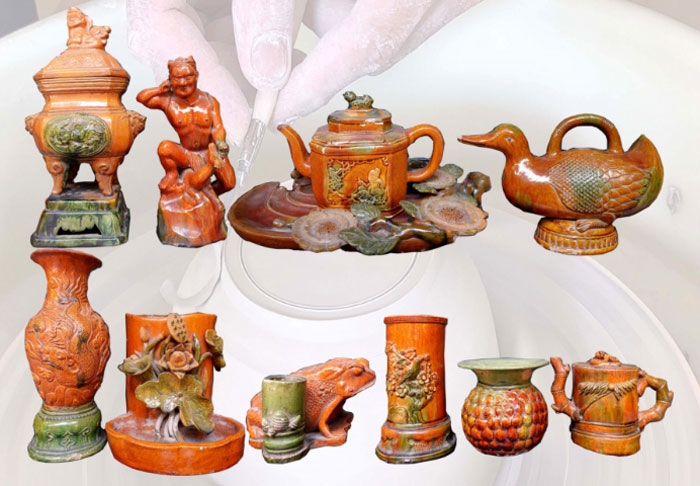
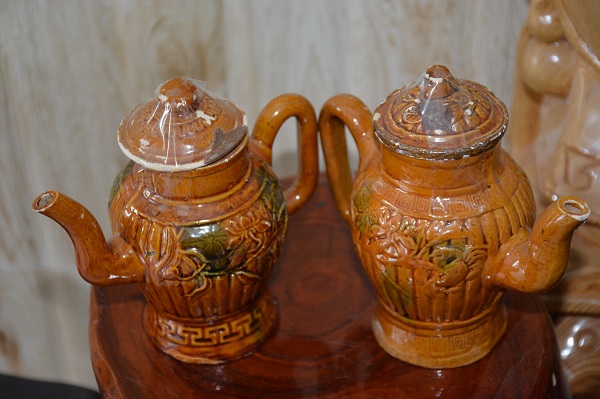
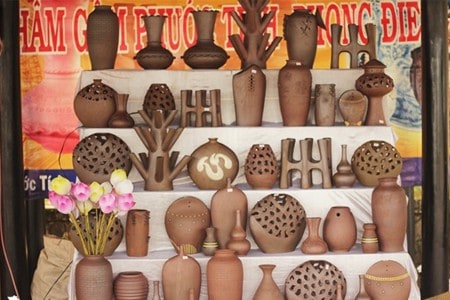
According to many recorded documents, My Thien pottery village now belongs to Chau O town, Binh Son district (so often called My Thien-Chau O pottery) began to form in the late 18th and early 19th centuries with the ancestors of the craft. are two men, Pham Cong Dac and Nguyen Cong At, originally from Thanh Hoa who immigrated to Quang Ngai to start a business. The ceramic line has a very diverse product system from household items (flower vases, lime vases, kettles, pots, pen holders, chopstick holders…) to decorative items (statues, reliefs…) .
With the main glaze colors of orange and green and unique patterns, Chau O pottery quickly established its name and gradually became the most famous in the region. The pottery village was once assigned by Lord Nguyen’s palace to make royal utensils (king’s utensils), very sophisticated tributes and gifts, and was bestowed with precious awards and awards. From the second half of the 19th century to the first half of the 20th century, Chau O ceramic products were widely traded throughout the South Central and Southern provinces with many archaeological artifacts as well as objects kept by the people discovered. in provinces such as Thua Thien Hue, Da Nang, Gia Lai, Dong Thap, An Giang…
The historic flood in the year of the Dragon (1964) was passed down in folklore as the “Great Disaster in the Year of the Dragon” causing terrible damage to the central provinces from Thua Thien Hue to Binh Dinh. Thousands of people died and their homes, possessions and crops were swept away by the water. My Thien-Chau O pottery village located on the Tra Bong river was also almost completely destroyed, putting this type of pottery at risk of oblivion and loss. From then until 1975, the potters here seemed unable to find a way to help the pottery village revive.
My Thien Pottery Cooperative was born in 1982 with more than 200 members, with the purpose of making a lot of ceramic products to sell in exchange for food and other necessities for distribution during the subsidy period. During this period, My Thien-Chau O pottery village gradually prospered, but because production was driven by quantity, the traditional features of ancient pottery also faded quite a bit. By 1998, the cooperative was dissolved because its products were difficult to sell and stagnant. Dozens of pottery kilns in the village had to gradually quit and switch to other professions to make a living.
From the late 1990s to the early 2000s, artisan Dang Van Trinh, along with the only remaining pottery kiln in the village, sought many ways to restore My Thien-Chau O ceramic production. He combined traditional crafting methods and added experience from other ceramic lines but did not bring many positive results. When everything was progressing, Storm No. 9 in 2009 came and destroyed his house and pottery kiln. With great enthusiasm and energy, artisan Dang Van Trinh continued to borrow money and once again decided to revive the traditional My Thien-Chau O pottery craft of his homeland.
Along with the determination to restore the My Thien-Chau O pottery craft of artisan Dang Van Trinh, the authorities of Quang Ngai province also determined that this ceramic line is a heritage that needs to be preserved in the province, so they have created conditions to help. He and his wife built a production and business facility.
In 2012, Mr. Trinh’s pottery kiln was recognized by the Provincial People’s Committee as a traditional craft establishment. Next, from 2016 to 2020, the Department of Industry and Trade in conjunction with the Department of Culture, Sports and Tourism of Quang Ngai province visited many times to survey and support machinery and equipment as well as build showrooms and attract customers. Tourists come to visit the family’s pottery kiln.
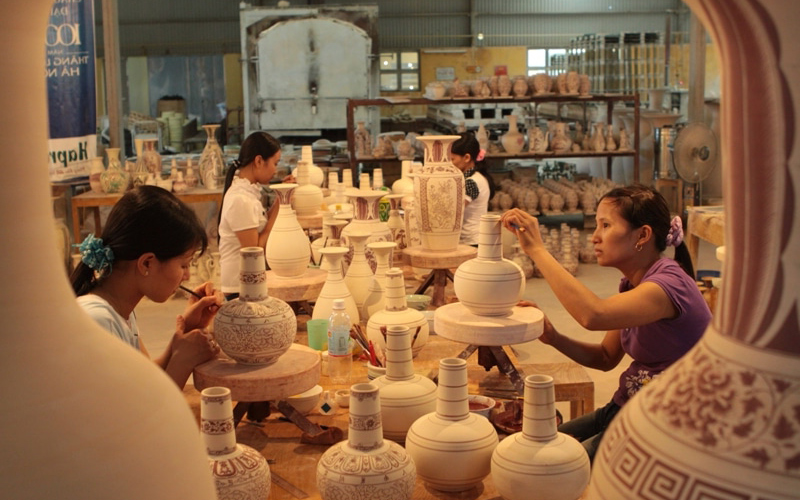
Many customers from other localities, including foreigners, are very fond of My Thien-Chau O ceramic products. So they came to order the production facility of artisan Dang Van Trinh’s family. Wherever the products are made, they are consumed, creating a fairly stable source of income. According to Mr. Trinh, ceramic products here are handmade in many stages, of good quality and unique. What makes the product unable to thrive in the market is that the brand promotion stage is still poor, and the policy to support the vocational training process for the next generation of young artisans to preserve heritage has not been implemented by the State. attention.
In recent years, in addition to Mr. Trinh’s family’s pottery kiln, an artist in his 40s, Ngo Dao Giang, and collector Lam Du Xenh, a person very dedicated to preserving artifacts, have appeared. Ancient My Thien-Chau O ceramics have added a fresh touch to the path of preserving and restoring production of this famous ceramic line. Hopefully in the near future, My Thien-Chau O pottery village will return to the bustling atmosphere like its golden age, and may even develop strongly to become an attractive ceramic brand in the market. school.
Subscribe to our newsletter to receive updates, news and insights.