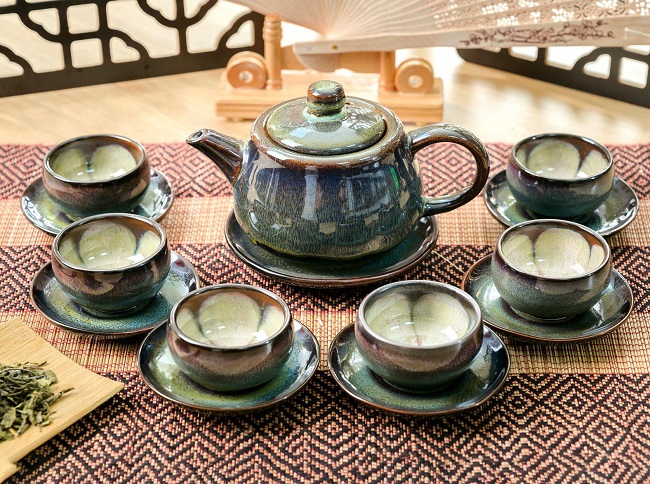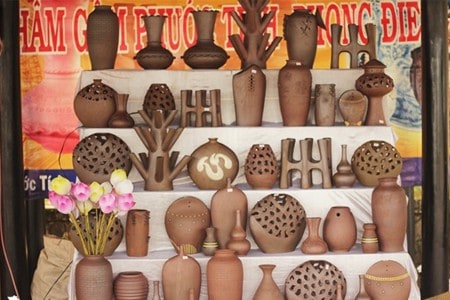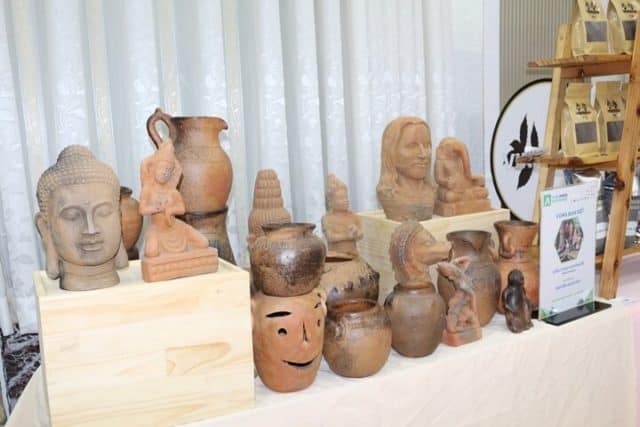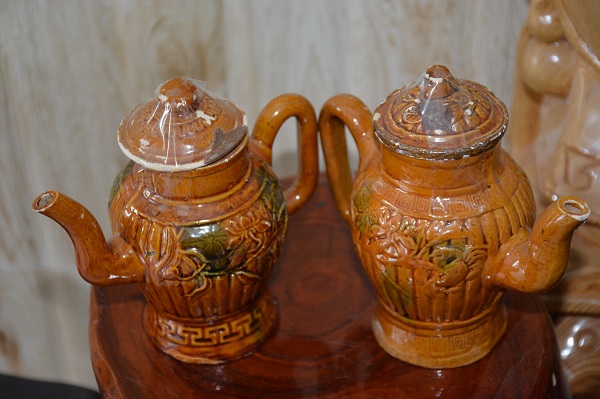
On the occasion of Vietnamese Cultural Heritage Day (November 23), the National Museum of History in collaboration with the Vietnam Cultural Heritage Association and An Bien Collection will open a thematic exhibition of Vietnamese Ceramics: A Unique Tradition – Looking from the An Bien Collection on November 19, the public had the opportunity to enjoy nearly 70 unique ceramic artifacts selected from the An Bien antique collection and a number of artifacts from the Museum of History. nation.
The journey of Vietnamese ceramics at the Exhibition will span each historical period. Starting with Vietnamese ceramics from the first 10th century AD. More than 2,000 years ago today, from new techniques in pottery making popularized from China, Vietnamese pottery with existing traditional qualifications and experience was quickly absorbed, mastered and developed to creating unique nuances, becoming one of the few countries with the profession of producing glazed ceramics that was born early and develops continuously.
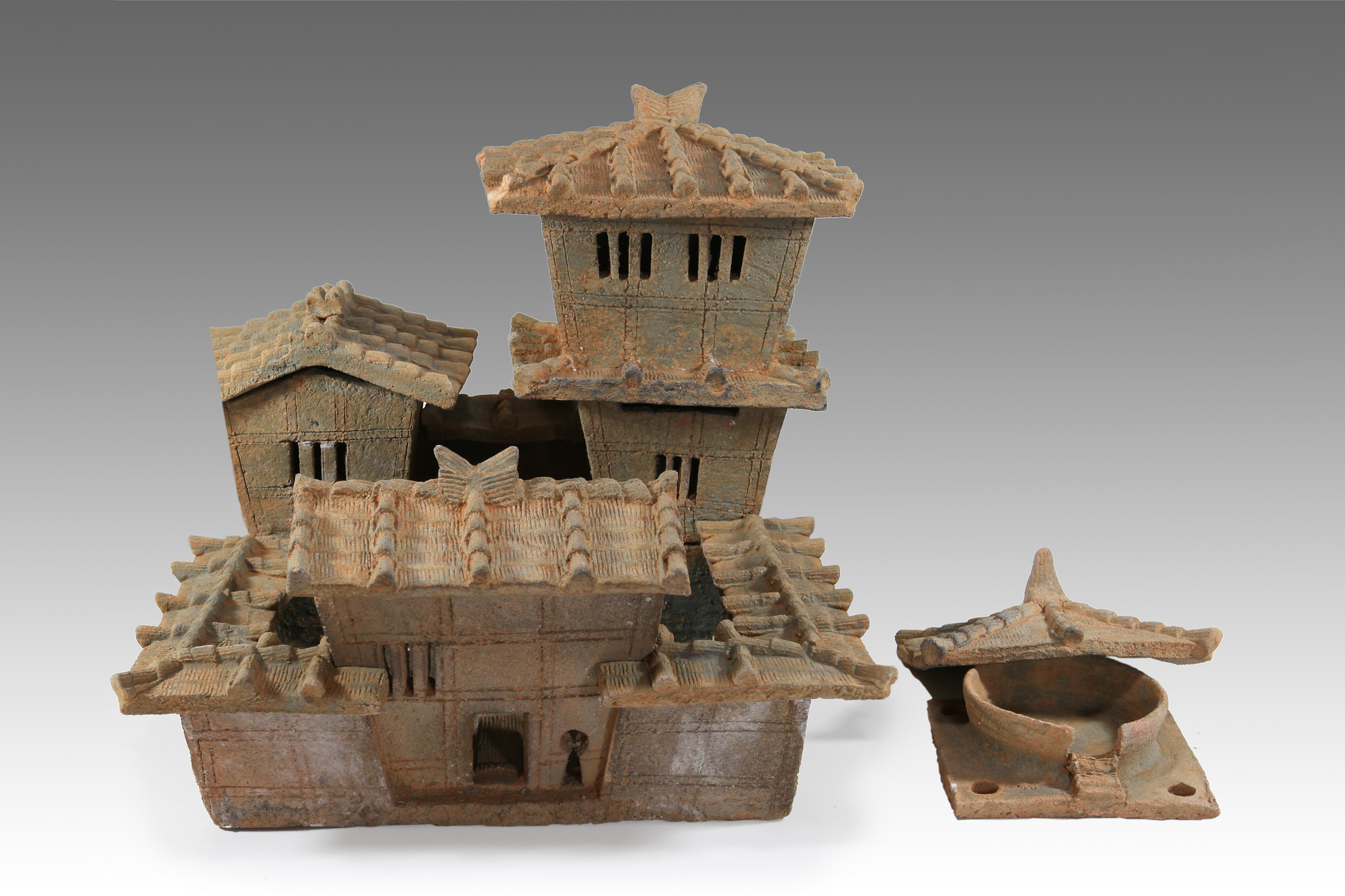
The transformation and change of pottery during this period is also reflected in the scale and organization of production. Unlike the previous Dong Son period, we have not found a production center, because ceramic products are mainly self-sufficient, without specialization, with a simple and compact production process. , at this stage, a series of large-scale production centers were born. Excavations of ancient pottery kiln relics in Tam Tho (Thanh Hoa), Dai Lai, Luy Lau, Duong Xa (Bac Ninh), Thanh Lang, Lung Ngoai, Dong Dau (Vinh Phuc) showed that craftsmen made pottery This period combined the Dong Son ceramic tradition with contemporary advanced Chinese ceramic production techniques to produce ceramics with indigenous nuances.
Pottery of the I-III centuries
Characteristics of ceramics of this period include thick ceramic bones, thin glaze that often does not cover the entire object, and ivory yellow, pale white, gray white glaze; decorated with embossed patterns, herringbone or coconut leaf patterns, diamond shapes, S letters, brush patterns, water wave patterns… some kettles, bowls and jars are decorated with lotus petals, birds, fish, chicken head, elephant head.
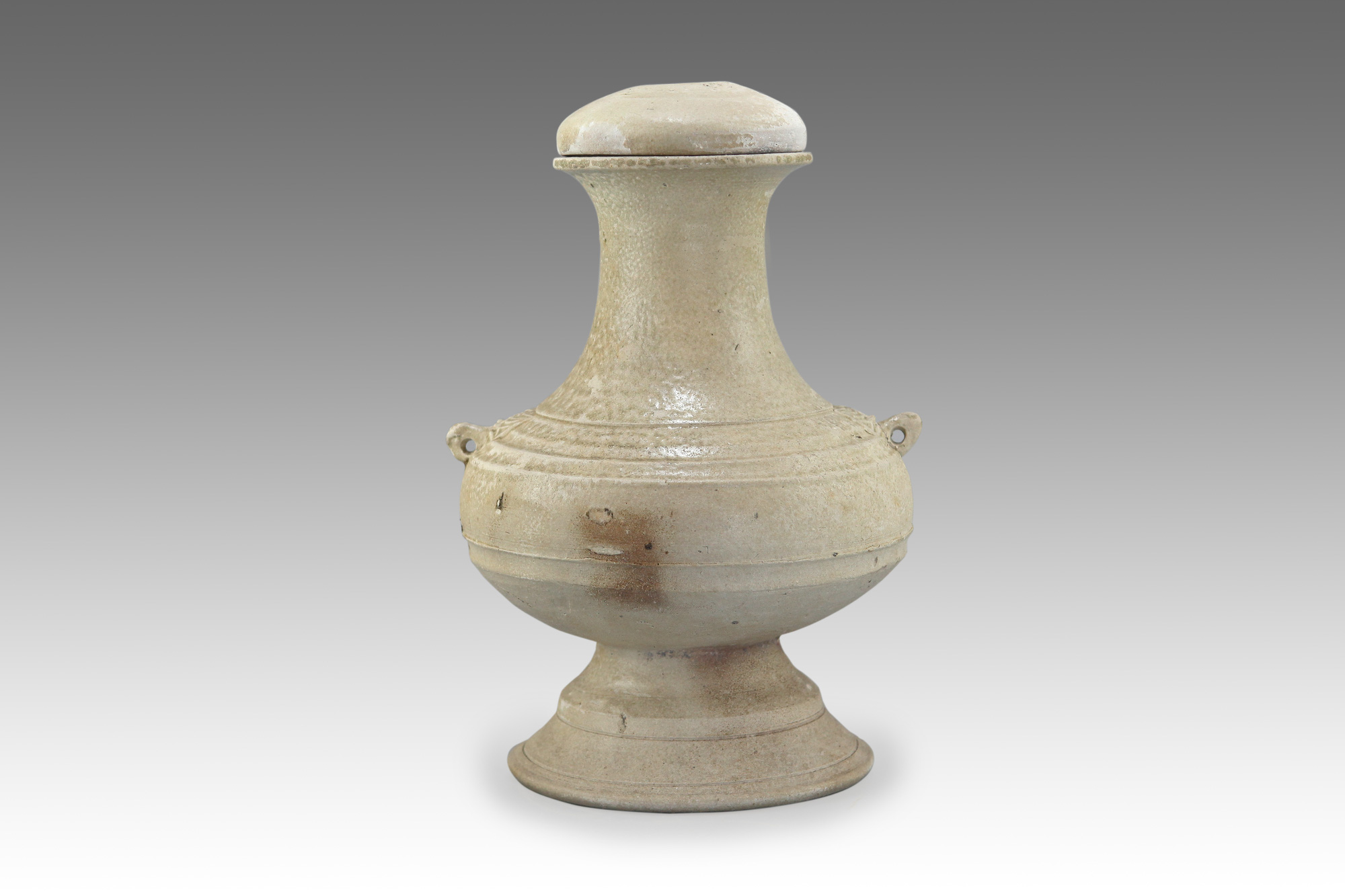
From the 3rd century to the end of the 6th century, ceramic production in the Southern region had great developments, a new type of ceramic appeared: white glazed ceramics, blue white glazed fired at high temperatures, bone and hard ceramic enamel. This is a revolution in ceramic production on a world level.
Research and excavation of ancient pottery kilns in Co Loa (Hanoi), Dai Lai, Luy Lau, Duong Xa (Bac Ninh), Thanh Lang, Dong Dau, Lung Hoa (Vinh Phuc), Tam Tho (Thanh Hoa) shows Many pieces of white-glazed, blue-white-glazed ceramics appear in a variety of shapes. Therefore, it can be firmly affirmed that Vietnam during this period also caught up and became one of the rare countries in the world that can produce this type of high quality ceramic.
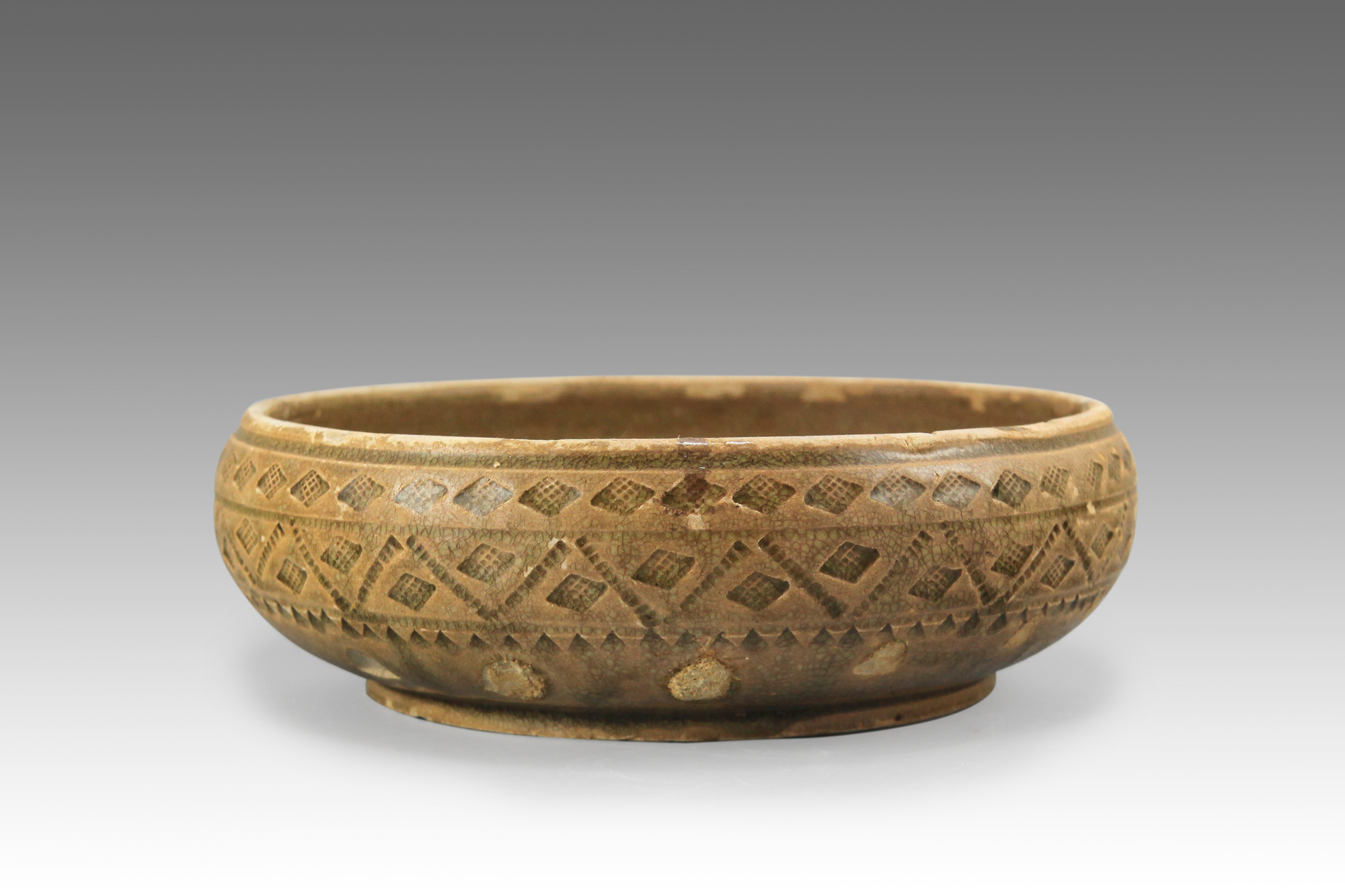
Pottery of the I-III centuries
The exhibition also introduces phase 2 of Vietnamese ceramics from the 11th to 14th centuries: From the 10th century, Vietnam entered the period of building independent feudal national states. Pottery making has a strong development, playing an important role in economic and cultural recovery and development, creating a unique identity, rich types, diverse decorations, and unique aesthetics. . Pottery kilns specializing in producing products for the royal court appeared right in the central area of Thang Long Imperial Citadel. Pottery kilns have also been found in Thang Long, Hai Duong, Nam Dinh, Thanh Hoa, and Ninh Binh.
Vietnamese ceramics of the Ly – Tran dynasties developed independently, exploring indigenous decorative themes of the Vietnamese people, and at the same time received and strongly modified technical elements, shapes, and flowers. Characteristic writings of the Chinese ceramic production tradition during the Tang and Song dynasties, creating one of the most brilliant historical pages of the Vietnamese ceramic production tradition.
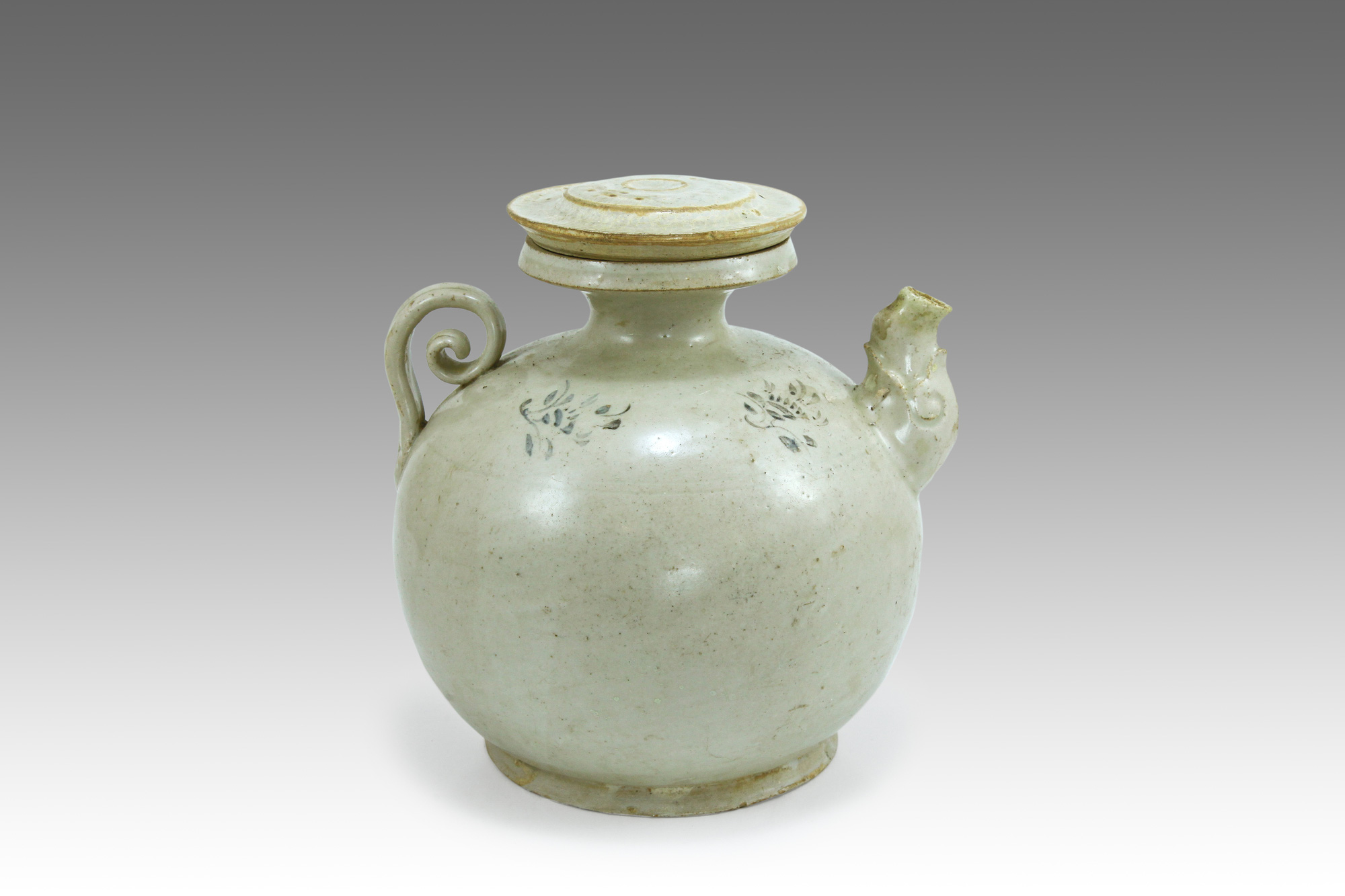
Blue Flower Ceramic material. Date 14th century
Pottery of this period was produced for consumption from the royal court to the common people, forming many lines of glazed ceramics with rich types and diverse decorations: white glazed ceramics, celadon ceramics, green and yellow glazed ceramics. , brown glazed ceramics, brown floral ceramics and at the end of the 14th century blue ceramics appeared.
White glazed ceramics were very popular during the Ly – Tran dynasties, with large quantities, rich types, and high aesthetics, many of which were exquisitely crafted with unique and symbolic decorative patterns. noble like dragons, lotus flowers, chrysanthemums… White glazed ceramics have many different shades such as ivory white, opaque white, bright white with a bluish tint, the glaze surface is smooth and has small cracks over time, causing it has a profound beauty.
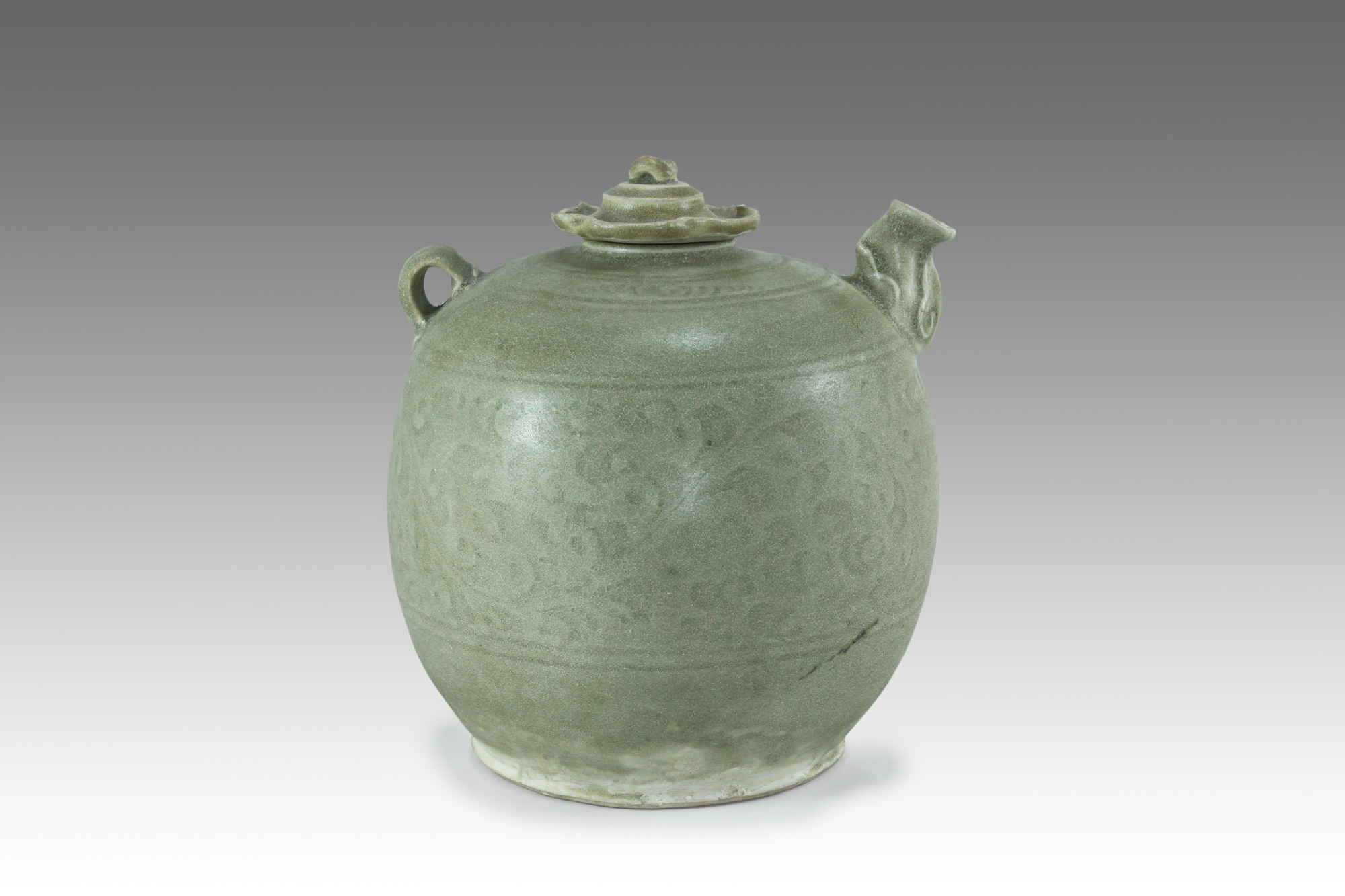
Material Ceramic celadon. Chronology XIII – XIV centuries
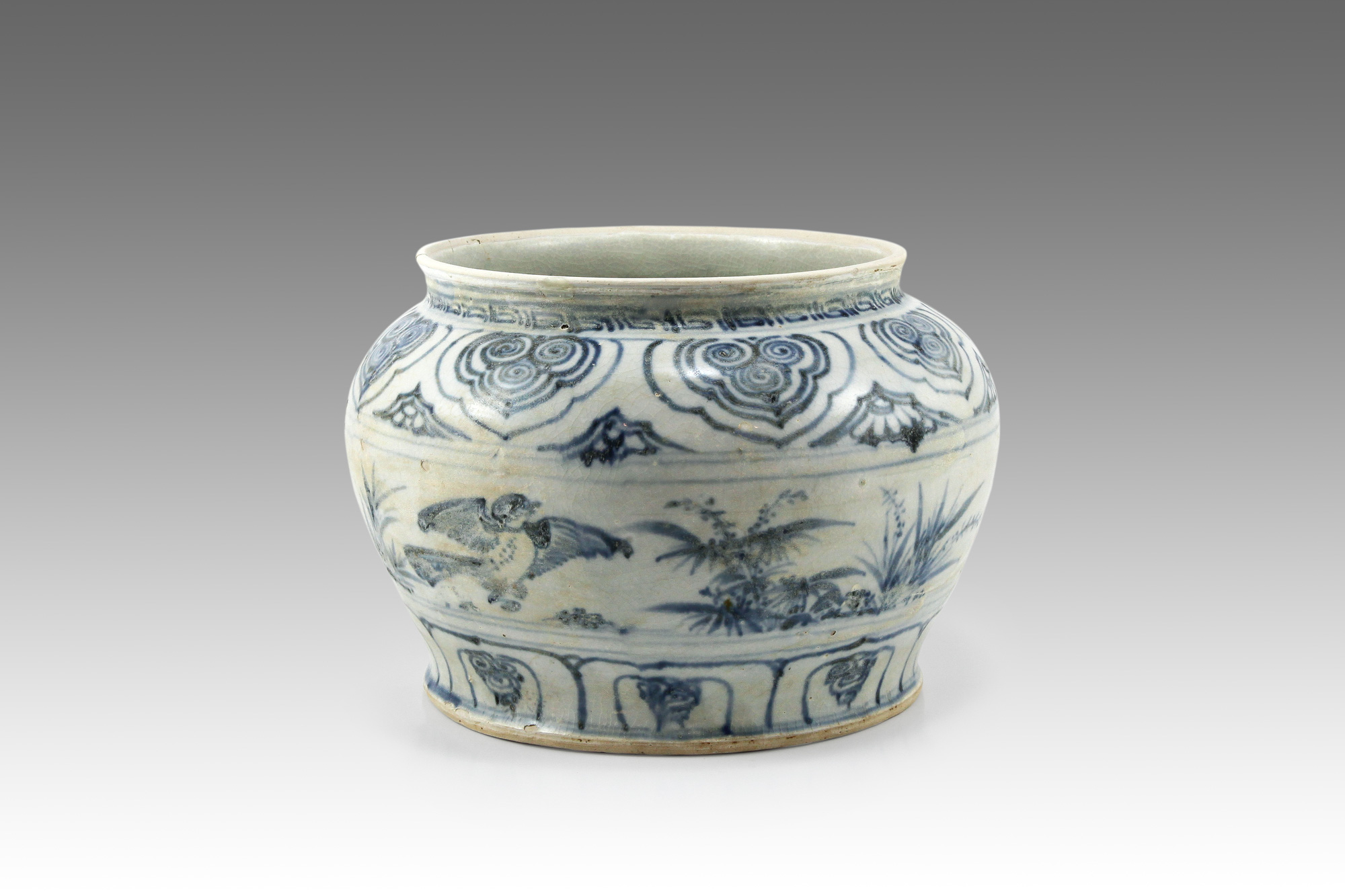
Material: Blue flower ceramic, dated 15th century
Techniques for creating patterns on white glazed ceramics are also very rich, with unpredictable variations: engraving, stenciling, embossing to create lotus petals on the outside of the body or indenting, engraving to create zones along the body, perforating… using texture. Combining the above techniques creates elegance, sophistication, and sophistication for each work.
Phase 3 of the journey of Vietnamese ceramics was from the 15th to 17th centuries, this was a period of strong development of trade relations between Vietnam and many countries around the world. Pottery is an important export item, creating conditions for ceramic production in Vietnam to develop dramatically in both quantity and quality with many specialized production centers and many types of ceramics achieving outstanding results. to the high technical and artistic level of famous ceramic production centers: Thang Long, Bat Trang (Hanoi), Nam Sach, Binh Giang (Hai Duong)… Results of archaeological excavations in Cu Lao Cham ancient ships collected over 240,000 exported Vietnamese ceramic artifacts with rich types and unique fine arts; Along with the excavation results of pottery kilns in Nam Sach and Binh Giang (Hai Duong), ancient pottery from Cu Lao Cham contributes to clarifying many issues about the history of Vietnamese pottery.
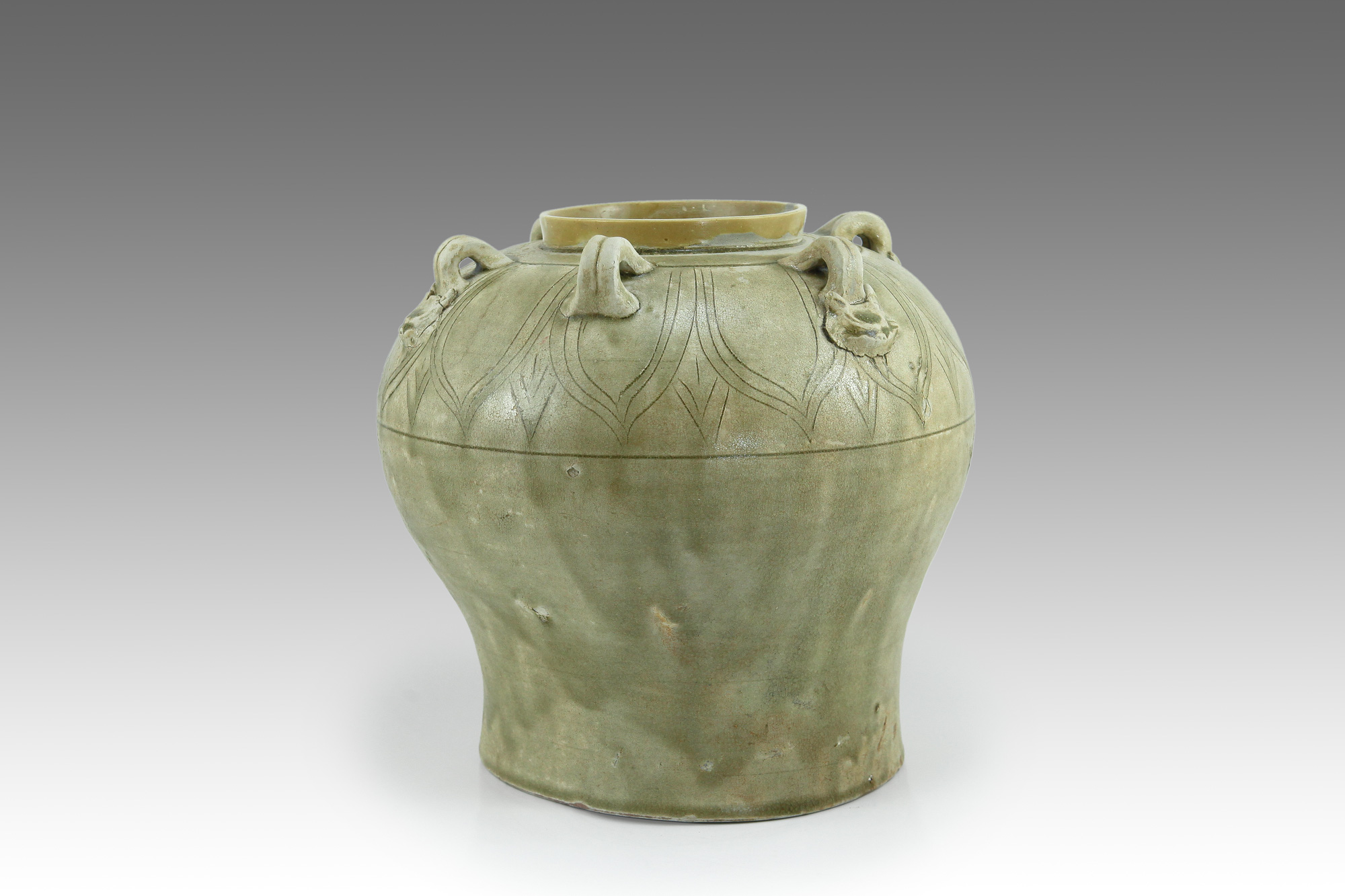
Ceramic material. Dated VI century
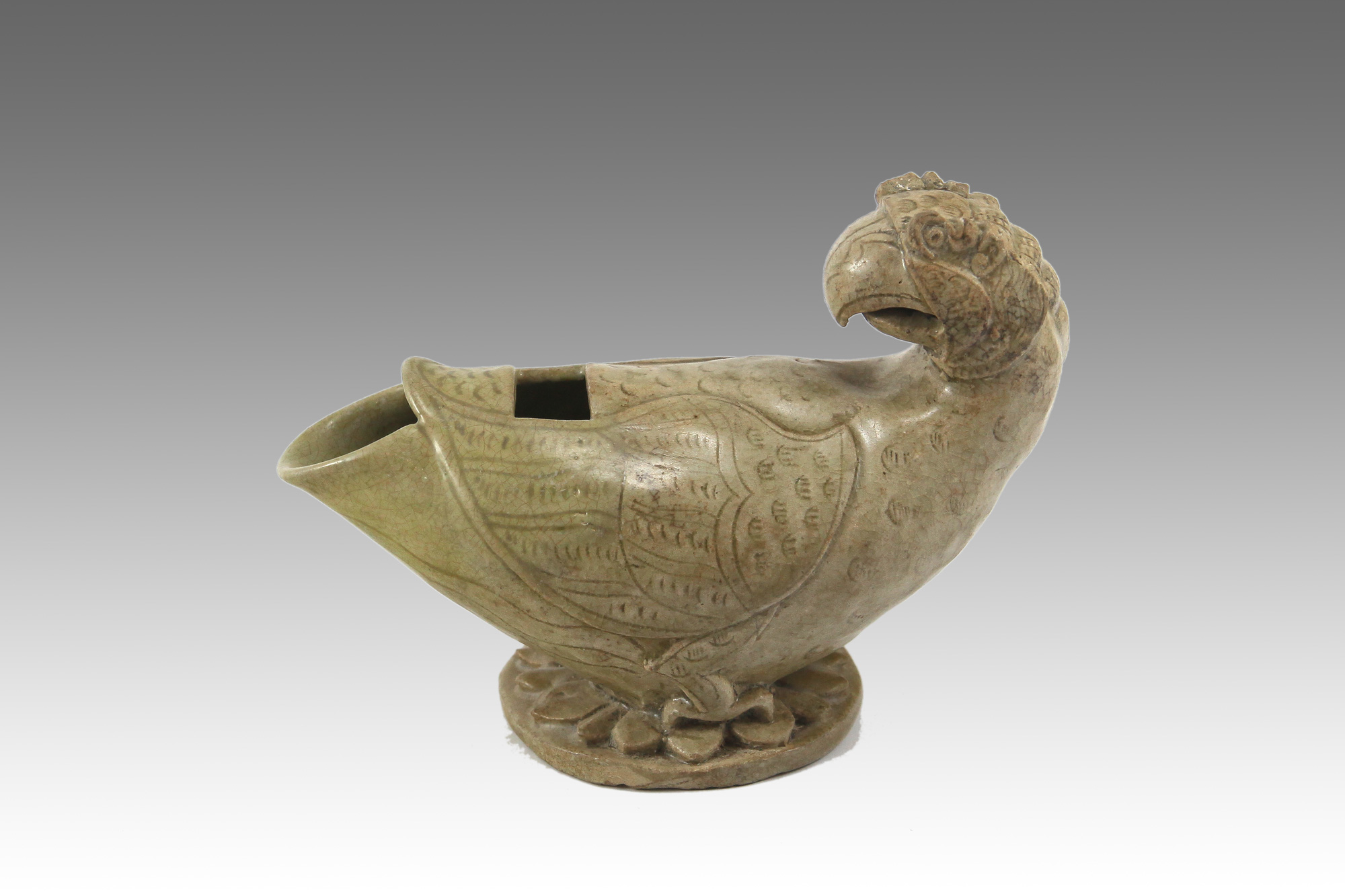
Material White glazed ceramic. Dating XII-XIII centuries
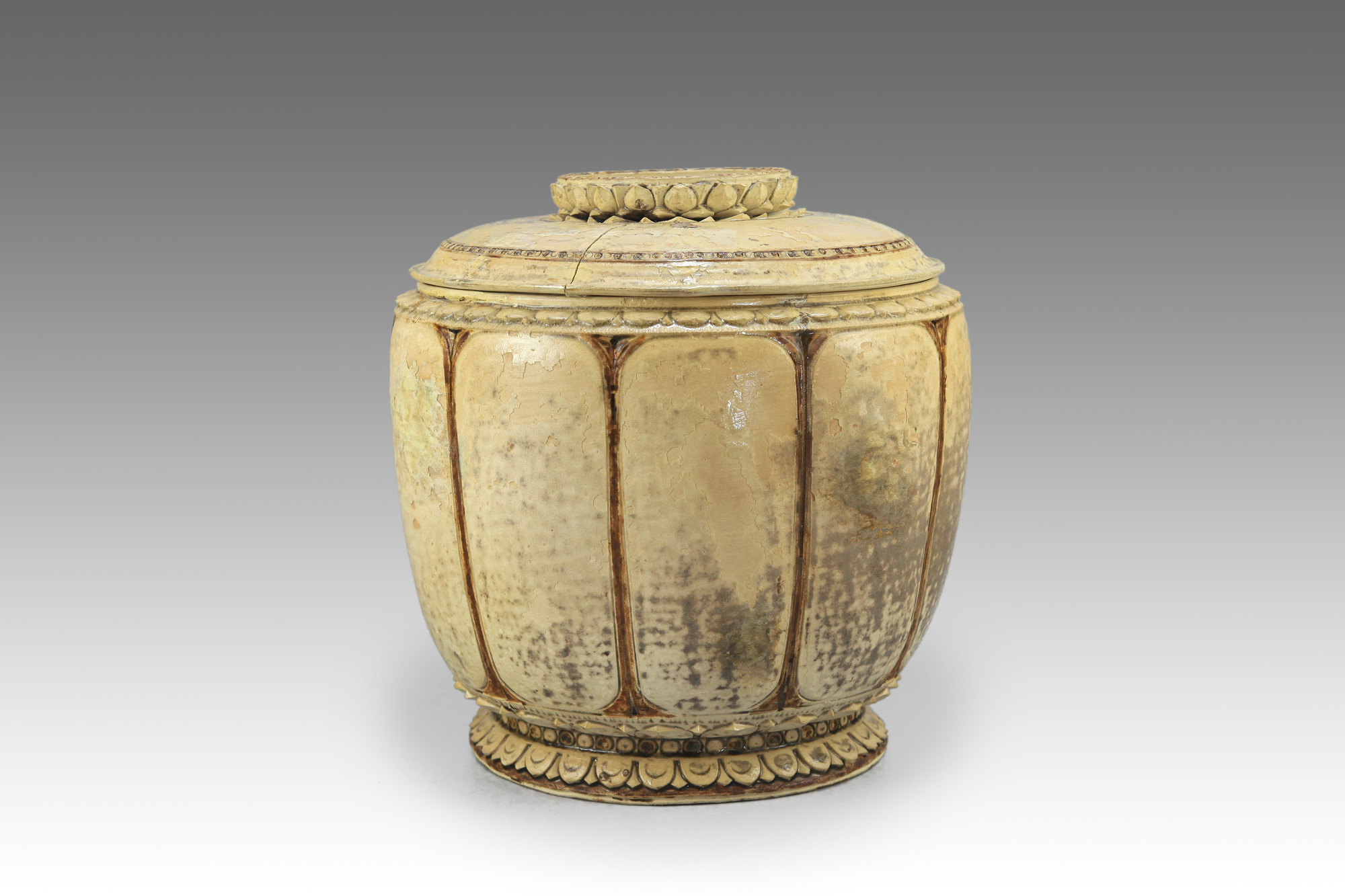
Material Brown ceramic. Chronology XIII-XIV centuries
Finally, there is Bat Trang Pottery of the 18th and 19th centuries. Bat Trang – a traditional pottery village dating back to the 14th century was also affected, the export ceramic market no longer exists, but still retains its vitality thanks to a large domestic consumer market for household appliances. , altar items, decorations, custom-made items to suit your tastes.
By exploring the journey of Vietnamese ceramics, the public will also learn about the ups and downs of each historical period. To love and appreciate cultural products that bear the mark and identity of Vietnamese culture./.