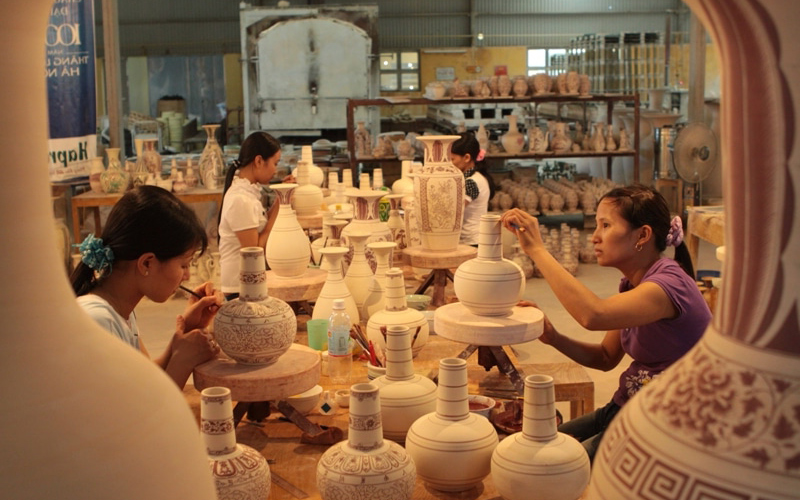

Bat Trang ceramics is the common name of Vietnamese ceramics produced in Bat Trang village, Bat Trang commune, Gia Lam district, Hanoi.
After the Indochina War (1945–1954), in 1957, 10 individuals who were landowners and landowners’ children of Giang Cao village (after land reform in 1955) contributed capital to establish Truong Thinh ceramic company, to produce Civil ceramics serve society, this is the starting foundation for Bat Trang Porcelain Enterprise. In 1958, the state made a public-private partnership, converting Truong Thinh ceramic company into Bat Trang Porcelain Enterprise, hiring workers from Bat Trang village to work. With complete facilities, Bat Trang workers are tested, practiced, and created based on hard work and diligence, creating a generation with solid ceramic skills.
After 1986, Bat Trang pottery village had a big change towards a market economy. Cooperatives were gradually dissolved or transformed into joint stock companies. Large companies were established, but many production groups still existed and were commonly small production units based on households. Bat Trang commune has now become a large pottery center.
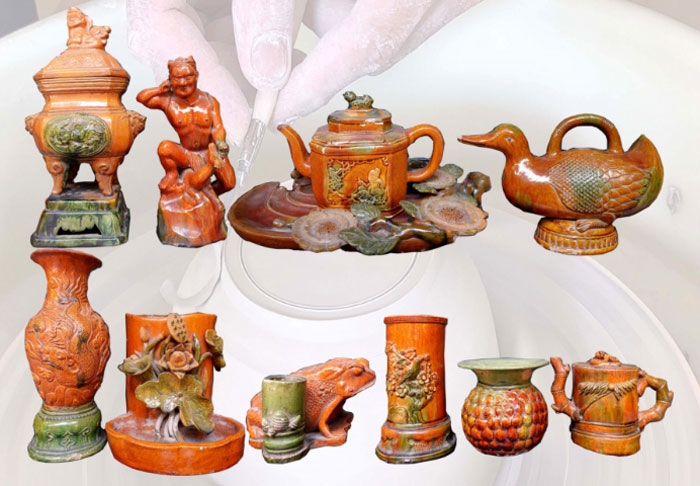
Currently, Bat Trang ceramic products are increasingly rich and diverse. In addition to traditional items, Bat Trang ceramic kilns also produce many new products to meet consumer requirements in Vietnam such as new types of teapots, dishes, flower vases…, and construction materials. , stylized porcelain… and export products according to foreign orders. Bat Trang products are present on the national market and are exported to many Asian and European countries. Bat Trang attracts many human resources from all over to create new designs and improve production technology. Some artisans have initially succeeded in restoring a number of traditional ceramics with unique designs and glazes from the Ly, Tran, Le, Mac dynasties…
Most of Bat Trang ceramics are produced manually, clearly demonstrating the creative talent of the craftsmen passed down through many generations. Due to the nature of the raw materials to create the ceramic core and the shaping is done by hand on a turntable, along with the use of domestically exploited glazes according to experience, Bat Trang ceramics have the unique feature of full core, Firm and quite heavy, the white enamel layer often turns ivory and opaque. Bat Trang is also a pottery village with its own glazes ranging from brown and white celadon to cracked glaze with gray-brown porous ceramic core. Based on the meaning of use, the types of Bat Trang ceramics can be divided as follows:
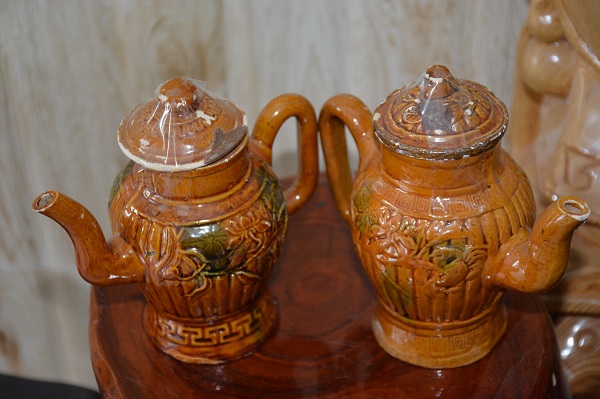
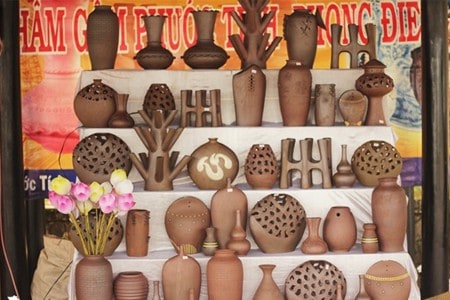
Household ceramics: Including plates, flower pots, bowls, jars, pots, bowls, cups, tea trays, kettles, cigarettes, wine pots, lime jars, jugs, vases, pots and jars.
Pottery used as worship objects: Includes candlesticks, candlesticks, incense burners, tops, altars, ceramic trays and swords. Among them, candlesticks, incense burners and tops are valuable products for contemporary collectors because many of them have inscriptions clearly stating the author’s full name, hometown and year of manufacture. The piece also has the full name of the person ordering it engraved. That is a special feature in Bat Trang pottery.
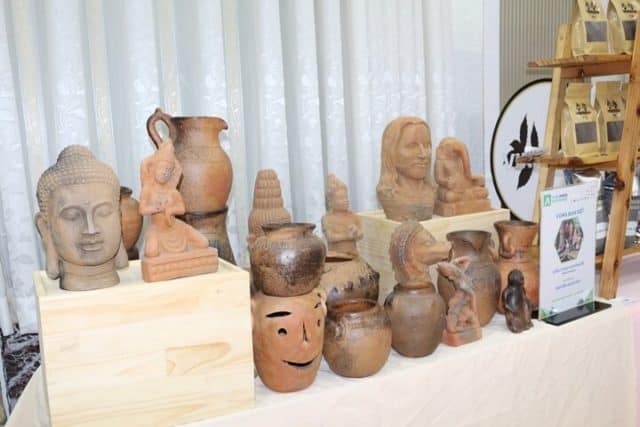
Decorations: Including house models, dragon temples, statues such as Nghe statues, horse statues, Maitreya statues, Diamond statues, tiger statues, elephant statues, three-headed human statues, monkey head statues and snake bodies and dragon statues .
Bat Trang has 5 characteristic glaze lines expressed through each different period to create different characteristic products: blue glaze first appeared in Bat Trang with ceramics ranging from lead green to dark black; Brown enamel is presented in a traditional style and painted using blue enamel technique; Ivory white enamel was used on many types of ceramics from the 17th to the 19th century. This enamel is thin, ivory yellow, and glossy, suitable for meticulous embossed decorations; Celadon was used in combination with ivory and brown enamel to create a very unique Tam Thai style of Bat Trang in the 16th and 17th centuries, and cracked enamel is a type of enamel that only appeared in Bat Trang from the late 16th century and developed continuously. continued through the 17th–19th centuries.
Subscribe to our newsletter to receive updates, news and insights.